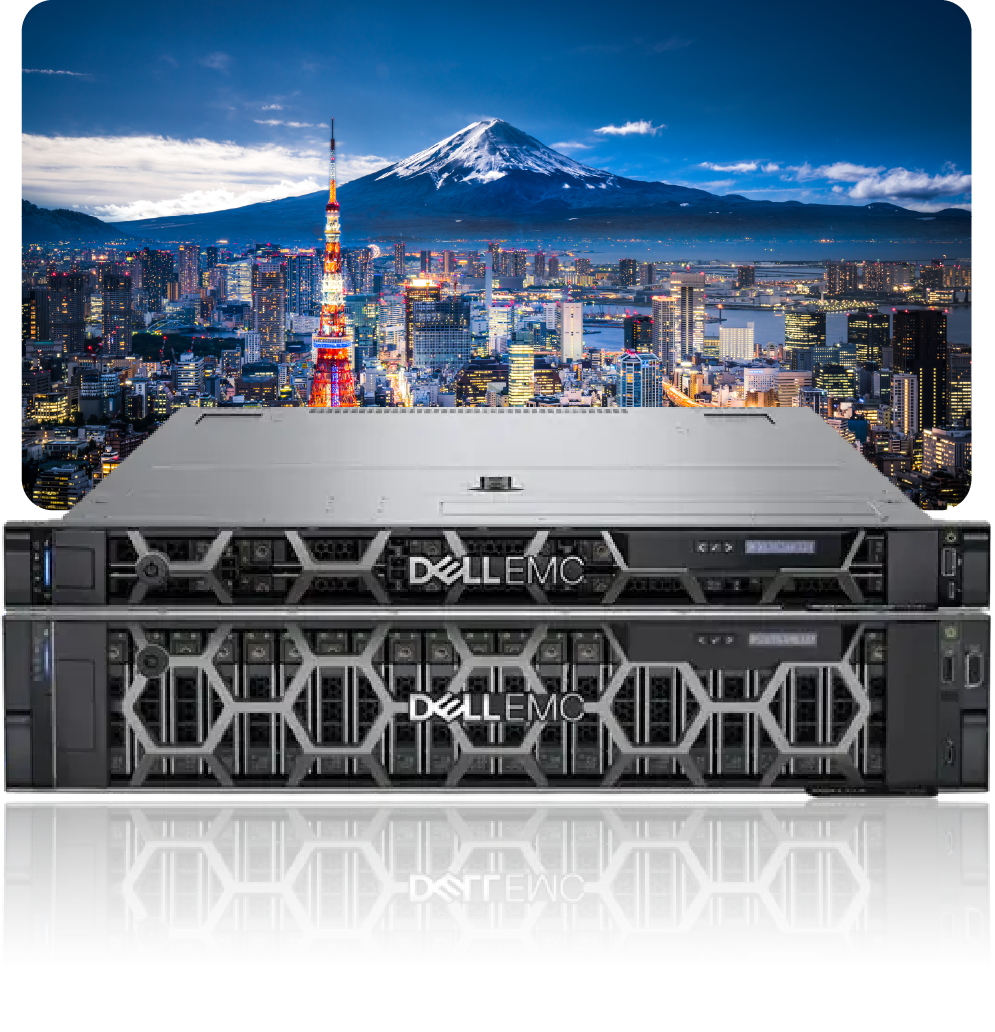
A dedicated server allocates the full CPU, memory, storage, and network resources of a physical machine to a single workload. Compared with shared environments or lightweight virtualization, it provides higher stability, more predictable performance, and broader system control.
Dedicated servers fit production workloads that require sustained performance, stronger isolation, and full system control. You can customize the operating system, storage layout, network policies, and security strategy around your business needs.
High-performance processors, NVMe SSD, high-speed networking, and fully isolated resources help reduce the contention common in shared environments. They are well suited to databases, high-concurrency APIs, gaming platforms, proxy networks, enterprise systems, and always-on services.
For teams that need greater stability, stronger isolation, and more room for deep tuning, dedicated servers are closer to real production infrastructure requirements.

From dedicated server deployment and resource planning to migration and switchover, we follow a delivery approach designed for production workloads and smoother transitions to isolated hardware.
Server-grade hardware, stable networking, and standardized data center resources provide a stronger foundation for high-load, long-running, and business-critical services.
Continuous response for deployment, reinstallation, migration, incident troubleshooting, and resource adjustments helps lower the operational cost of going live and staying online.
High-performance storage improves random read and write responsiveness for databases, cache services, and frequently accessed workloads.
Designed for compute-dense and sustained-load scenarios, improving throughput for multithreaded tasks, business logic, and data processing.
Supports mainstream operating systems, making it easier to keep your existing stack and reduce migration friction.
With isolated physical resources, systems, networking, security, and application components can all be customized around workload needs.
Eliminates resource contention from shared environments so workloads keep more predictable response times and throughput during peaks.
Standardized facilities, power, and network environments provide stable operating conditions for long-running services.
Better suited to long-running and more complex workloads, delivering a more reliable resource foundation for critical applications.
Covers common operations scenarios including troubleshooting, OS reinstallation, resource changes, and network handling.
Isolated environments make it easier to plan access control, perimeter protection, isolation strategies, and workload-specific security.
Suitable for building your own virtualization or container platforms, with better fit for multi-node services, test clusters, and hybrid architectures.
The key to selecting a dedicated server is first identifying whether the bottleneck comes from CPU, memory, storage, or network, then choosing a platform that matches that constraint. Databases and cache services usually care more about memory and storage I/O, while high-concurrency APIs and compute-heavy tasks rely more on CPU performance and network stability.
If you need long-term stability, workload isolation, custom networking, or stronger system control, a dedicated server is usually a better long-term production foundation than shared resources.
Dedicated servers provide stronger isolation, higher performance ceilings, deeper system access, and better security boundaries. You do not need to worry about other workloads consuming shared resources, and you can shape the system, applications, and protection strategy around your own needs.
This model is especially suitable for teams with high stability requirements, clear peak traffic patterns, complex deployment strategies, or plans to build platform capabilities gradually.
The core value of choosing a dedicated server is that key resources remain exclusively assigned to your workloads, making CPU scheduling, storage access, and network paths more stable and predictable.
When applications need stronger consistency, observability, and tuning headroom, dedicated servers give operations and development teams a clearer control boundary.
Dedicated servers are a strong fit for large projects with higher performance demands, such as ecommerce systems, game nodes, data analysis platforms, high-concurrency websites, enterprise services, and proxy networks.
Workloads that require stronger isolation, higher security, and long-term stability are better suited to isolated physical server environments.